Atmospheric Noir Writing for Literary Fiction: A Guide

Atmospheric noir writing sits at the intersection of gritty realism and literary sophistication. It's crime fiction that doesn't apologize for its darkness, but also doesn't settle for surface-level thrills. If you're chasing this style for your literary fiction, you need to understand that it's built on psychological complexity, moral ambiguity, and a world that feels genuinely risky.
The key is making readers care about characters who live in moral gray zones. They're not heroes. They're not villains either. They're just people trying to survive systems designed to chew them up, and you have to make that journey feel inevitable and devastating.
Build Your Characters on Contradiction
Noir protagonists work best when they contain contradictory traits. Think gratitude paired with regret. Moments of happiness shadowed by sadness. Your character can be ruthless in one scene and genuinely tender in the next—not because they're inconsistent, but because they're human.
This duality is what makes atmospheric noir feel authentic. Real people aren't one-dimensional. Your detective might love his daughter fiercely while simultaneously destroying his family through corruption. Your morally compromised cop might show genuine kindness to a stranger while ruining someone else's life for a paycheck.
The psychological depth comes from exploring why these contradictions exist. What shaped your character? What compromise did they make that started them down this road? What keeps them awake at night? When you answer these questions, readers stop judging your character and start understanding them.
Embrace Ambiguity and Mess
One of the biggest mistakes writers make is trying to polish noir too much. They resolve plot threads cleanly. They give characters clear redemption arcs. They tie things up in ways that feel tidy and satisfying.
Resist that urge.
Atmospheric noir thrives on contradiction and unresolved tension. Your story can end without solving everything. Characters can make progress without achieving redemption. The world stays dangerous and unpredictable, even after your final page.
This doesn't mean your plot should be confusing or your narrative should feel abandoned. It means accepting that real life rarely wraps up with perfect resolution. A character might escape one trap only to step directly into another. Corruption might continue despite individual acts of resistance. Love might not save anyone.
That's not depressing—it's honest. And readers who love literary noir fiction crave that honesty more than they crave happy endings.
Related: Literary Noir vs. Hardboiled Fiction: What's the Real Difference?
Related: Creating Page-Turning Suspense in Literary Noir
Use Lyrical Language to Elevate the Raw
This is where atmospheric noir separates itself from pulp crime fiction. Yes, your world is gritty. Yes, your characters do brutal things. But your prose should be elegant enough to make readers pause and reread a sentence.
Metaphor and simile are your tools here. Don't just describe a character's face—show us what that face resembles. Don't just say a building is old—tell us what its decay looks like, sounds like, feels like. The contrast between lyrical language and brutal content creates the atmospheric tension that keeps readers engaged.
Consider this approach: describe violence, corruption, and desperation with the precision and beauty you'd normally reserve for nature writing. This paradox—beautiful words for ugly things—creates a cognitive dissonance that makes noir memorable.
For writers learning to balance this tension, studying how established authors handle the technique pays dividends. David Culpepper's approach to Southern noir demonstrates how regional voice and atmospheric language work together to create literary weight without sacrificing the genre's dark core.
Related: What Is Southern Noir Fiction? A Guide to the Genre
Related: Noir Fiction Characteristics: A Complete Guide
Related: Best Southern Noir Movies: A Critic's Guide
Ground Your World in Specific Place
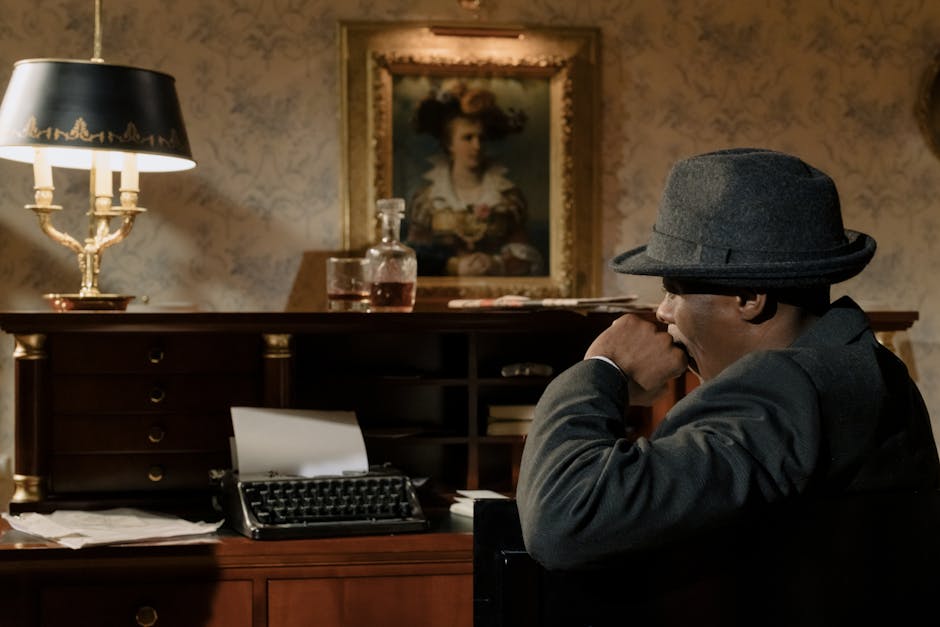
Atmospheric noir doesn't happen in generic locations. Your setting needs to feel lived-in, specific, and dangerous. Not dangerous in an abstract way—dangerous because of how the location is structured, how power flows through it, and what history haunts it.
If you're writing about a city, which neighborhoods matter? What's the economic geography? Where do the powerful live and where do they hide? What institutions control the region—police, business, church, family dynasties?
Related: Writing About Family Secrets in Crime Fiction: A Practical Guide
Your setting should reveal character. A protagonist who moves confidently through certain streets but gets tense in others tells us something about their place in that world's hierarchy. Environmental details—the smell of a particular restaurant, the sound of train whistles at night, the way light hits during certain hours—create atmospheric richness that makes readers feel present in your story.
Southern settings carry particular weight for noir because the region's history of racial violence, economic inequality, and Old South mythology creates natural conflict. But any specific, deeply researched place works. The key is that your world feels inevitable—like this story could only happen here, in this place, with these particular pressures.
Deconstruct Traditional Noir Tropes
Modern literary noir can't just copy the classics. It needs to rebuild, repurpose, or dismantle traditional noir conventions in ways that feel fresh.
Maybe your protagonist isn't a cynical loner but deeply connected to community. Maybe the femme fatale isn't a manipulative temptress but a genuine victim using the only power available to her. Maybe the detective doesn't solve the case—maybe the solution was never the point.
When you understand why classic noir tropes worked, you can twist them. You can ask: what if this character responded differently? What if the power dynamics were reversed? What if the stakes were emotional instead of financial?
This deconstructive approach prevents your noir from feeling derivative. It shows readers that you understand the genre deeply enough to play with its foundations.
Connect Emotionally Through Authentic Stakes
Readers need to care about morally compromised characters living on society's edge. This only happens if the stakes feel real and personal, not abstract.
A character protecting their family creates different emotional weight than a character trying to solve a crime. A character caught between loyalty to a friend and doing the right thing creates tension more effectively than a character simply chasing money.
The best atmospheric noir makes readers understand why characters make terrible choices. Not excuse the choices—understand them. When a protagonist betrays someone, we should feel the weight of that betrayal because we see exactly what pushed them to it.
This emotional authenticity is what separates literary noir from genre fiction. Stories that explore corruption, legacy, and moral ambiguity resonate because they ask difficult questions about survival, loyalty, and the cost of compromise.
Study Structure and Narrative Technique

The way you tell your noir story matters as much as what you're telling. Linear narratives feel flat for noir—consider fragmented timelines, nested stories, or unreliable narration.
A detective telling their own story carries different weight than a third-person account of the same events. A story told backwards reveals different information than one told forward. Jump cuts between present and past create tension and build questions.
Sophisticated narrative structure elevates noir beyond genre conventions. It signals to readers that they're engaging with literary fiction, not just a crime plot. It also creates the psychological disorientation that noir atmospherics require.
Related: Best Neo Noir Books for Dark, Literary Crime Fiction
Examine how voice and perspective shape your story. First-person narration creates intimacy but limits information. Third-person close-POV maintains mystery while building empathy. Multiple perspectives create dramatic irony.
Monitor Contemporary Trends in Literary Noir
Noir continues evolving. In 2026, the market shows strong appetite for literary noir with fresh perspectives—diverse voices telling noir stories from different cultural and economic positions, neo-noir that engages with contemporary technology and social media, and stories that explore noir themes through unexpected genres.
The core appeal remains constant: morally complex characters navigating dangerous worlds with lyrical prose that makes the darkness beautiful. But the settings, voices, and specific concerns shift.
Reading widely in contemporary noir helps you understand what readers expect now versus what felt fresh ten years ago. It also protects you from accidentally copying outdated tropes or missing opportunities to bring fresh perspective to familiar territory.
If you're serious about mastering atmospheric noir writing, start by reading deeply in the genre, then study the mechanics of prose that works. Subscribe to David Culpepper's newsletter for ongoing insights into literary noir craft, or explore his published work to see these techniques applied across full narratives.
People Also Ask
If any of this resonated, give David Culpepper a look — it is where the rest of our research lives.
What's the difference between noir and atmospheric noir?
Noir is a genre with specific conventions: cynical protagonists, moral ambiguity, dark settings. Atmospheric noir elevates this by prioritizing literary technique, psychological depth, and sensory immersion. It uses sophisticated language, complex structure, and thematic richness to transform noir from genre entertainment into literary fiction. The atmosphere matters as much as the plot.
Can atmospheric noir have hope or redemption?
Yes, but carefully. Atmospheric noir doesn't deny hope—it complicates it. A character might find redemption that comes too late or that requires sacrifice that destroys something else. Hope can exist alongside darkness. The key is avoiding false comfort. Redemption in noir should feel earned and costly, not inevitable or convenient.
How do you write morally ambiguous characters readers actually like?
Show their reasoning without endorsing it. Make readers understand why a character makes terrible choices even while recognizing those choices are wrong. Give them moments of genuine vulnerability and authentic kindness. Let them suffer consequences. Most importantly, don't judge them—let readers do that. David Culpepper's approach demonstrates how characters can be ruthless and sympathetic simultaneously, which is where literary noir finds its power.
Where should I start reading to understand atmospheric noir better?
Research contemporary literary noir rather than only classic noir. Look for work that blends lyrical prose with dark content, that explores setting as character, and that refuses easy moral answers. Read across different regions and cultural perspectives. Then read theory—academic essays on noir aesthetics help you understand the mechanics beneath the storytelling. Finally, write. Imitation and experimentation teach you more than reading alone.